PRICE ELASTICITY
HOW PRICING SHAPES BRAND EQUITY & CUSTOMER LOYALTY
We have already seen that fair and thoughtful pricing strengthens the brand and promotes customer loyalty in the long term. And that’s basically what brand equity means.
What is brand equity?
Brand equity refers to the intangible value of a brand, which is made up of factors such as brand awareness, trust and perceived added value. A strong brand with high brand equity can generally command premium prices.
Interestingly, pricing itself also plays a role in establishing brand equity. If your brand is perceived as high quality, a higher price will reinforce this image.
On the other hand, frequent discounts or prices that are too low can dilute brand equity and make the brand appear inconsistent or even desperate.
What is price elasticity?
Price elasticity is a concept that is closely linked to brand equity. It measures the extent to which demand changes when prices change.
Some brands (often strong brands) can increase their prices without a noticeable drop in demand, while other brands (usually weak brands) run the risk of losing customers even with small price increases. To build pricing power, you should therefore focus on differentiation and brand strength.
We can distinguish between elastic and inelastic pricing:
- Elastic pricing means that a small price change has a significant impact on demand. This often occurs in highly competitive markets or with price-sensitive customers, such as low-cost airlines or fast fashion.
- Inelastic pricing means that demand remains stable despite a price increase. This often happens with brands that are highly differentiated and have pricing power, such as luxury goods or niche products.
Understanding how pricing affects brand perception is only half the battle. Brands use specific pricing strategies to strengthen their positioning.
Since pricing and brand perception are closely linked, customer perception can be systematically managed through a tailored pricing strategy. Depending on the audience and market, different strategies are used, sometimes also in combination.
Here’s an overview of different pricing strategies and how they can strengthen your positioning.
1. Premium pricing
Setting your prices higher than the competition makes your brand a symbol of quality, craftsmanship, luxury, or prestige. But it’s important that all aspects of your brand-from design to brand experience to customer service-reflect this premium positioning and justify the price.
Example: Ferrari
Ferrari’s pricing emphasises its exclusivity. Every car is a piece of craftsmanship, and the premium price amplifies the appeal of owning a Ferrari.
2. Economy pricing
Economy pricing aims to make brands affordable for a wide audience - especially for those who prioritise practicality over prestige and are looking for more affordable solutions.
To avoid appearing ‘cheap’, added value should be created, for example through a likeable brand personality, strong values or a clever design. In This way, affordability becomes a strength and not a compromise.
Example: IKEA
IKEA offers stylish, practical furniture at affordable prices - not by cutting labour costs, but through simplicity, efficiency and clever design. Solutions such as flat-pack self-assembly help to keep costs down without compromising on quality.
3. Masstige Pricing
Masstige pricing - short for ‘prestige for the masses’ - combines premium and economy pricing. This strategy enables brands to offer products with a sense of prestige at a more affordable price and thus make high-quality products accessible to a broader audience.
Example: BMW
The BMW 1 Series is priced lower and serves as an entry-level model into the upmarket ‘BMW experience’.
4. Competitive pricing
With competitive pricing, the price is either at the same level as the competition or slightly lower. The goal is to offer similar quality at a better price. Brands that use this strategy often differentiate themselves through additional service or better customer experiences while remaining more affordable.
Example: Casper
Casper sells high-quality mattresses directly to the customer and saves costs by cutting out middlemen. This creates an affordable alternative to expensive luxury mattresses.
5. Parity pricing
With parity pricing, the price is based on that of the competitor, with the focus on the unique added value that the brand offers, such as excellent quality, innovative products or outstanding service.
Example: Samsung
Samsung charges similar prices for its smartphones as Apple does for iPhones, but differentiates itself through specific features such as more powerful cameras with higher megapixels.
6. Value-based pricing
In value-based pricing, the price is based on the perceived value of the product and not on manufacturing costs or competitors’ prices.
This strategy requires a deep understanding of customer needs and their willingness to pay to fulfil those needs. Brands that use this strategy often deliver directly measurable results.
Example: Pharma industry
Pharmaceutical companies often use value-based pricing for speciality drugs to treat rare or life-threatening diseases such as cancer.
7. Dynamic pricing
With dynamic pricing, prices are adjusted in real-time based on market demand, customer behaviour and competition. This flexibility is particularly useful in industries with fluctuating demand.
Example: Uber
Uber uses a surge pricing model and increases its prices at times of high demand-during peak hours or in bad weather.
8. Freemium pricing
With the freemium model, the basic version of a product is free, while extended functions are subject to a charge.
This strategy is particularly popular in the technology and app industry in order to gain a large user base and convert some of these users into paying customers.
Example: Spotify
Spotify offers free music streaming with ads. If you want to listen offline and ads, you can buy Premium access.
9. Tier pricing
Freemium is often combined with tiered pricing. Different packages are offered at different prices (‘good, better, best’). This allows brands to address different customer segments and position themselves as flexible and customer-orientated.
Example: Mailchimp
The newsletter platform Mailchimp offers tiered pricing to provide companies of all sizes with a suitable solution.
10. Subscription pricing
With the subscription model, customers pay a regular fee. This leads to recurring income and increases the lifetime value of an individual customer. This strategy is particularly suited to services that are used on a regular basis.
Examples: Netflix, Adobe and Dropbox charge a monthly fee. In this way, they can continuously improve their products and build strong customer loyalty.
11. Pay-what-you-want pricing
With the pay-what-you-want model, customers can decide for themselves how much they want to pay for a product or service.
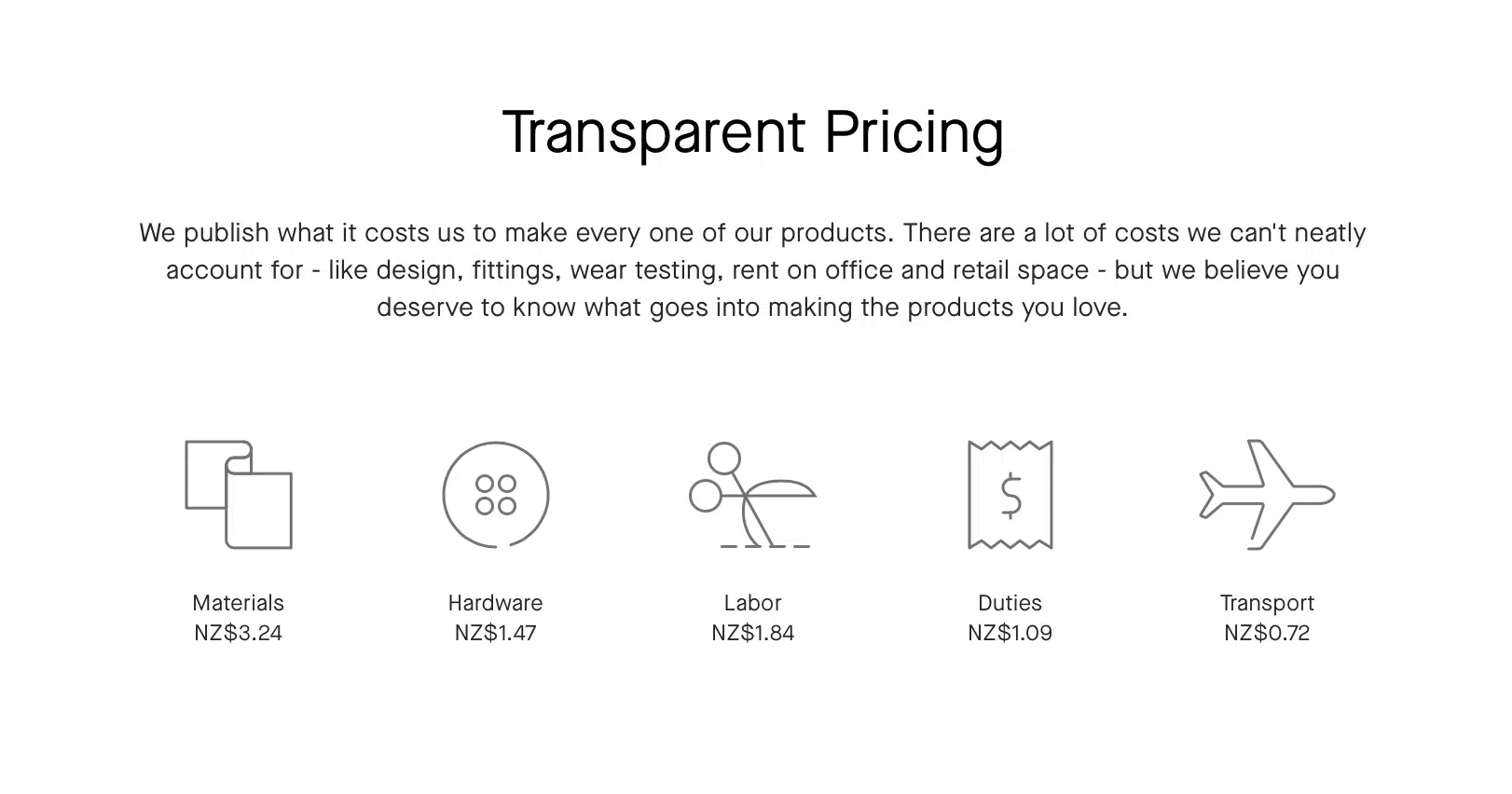
Although this model is rather unusual, it can help to build trust and generate enthusiasm. Brands that choose this model position themselves as transparent and customer-orientated. It’s often used in creative sectors.
Example: Atipo Foundry
Atipo Foundry offers its fonts on a pay-what-you-want basis. Radiohead also released their album In Rainbows in this way.
Disclose: "A well-crafted pricing strategy increases brand equity, builds brand trust, and fosters customer loyalty. Rather than focusing solely on competitive pricing and short-term profits, consider how your pricing reflects your brand’s promise and strengthens its essence."


Comments
Post a Comment